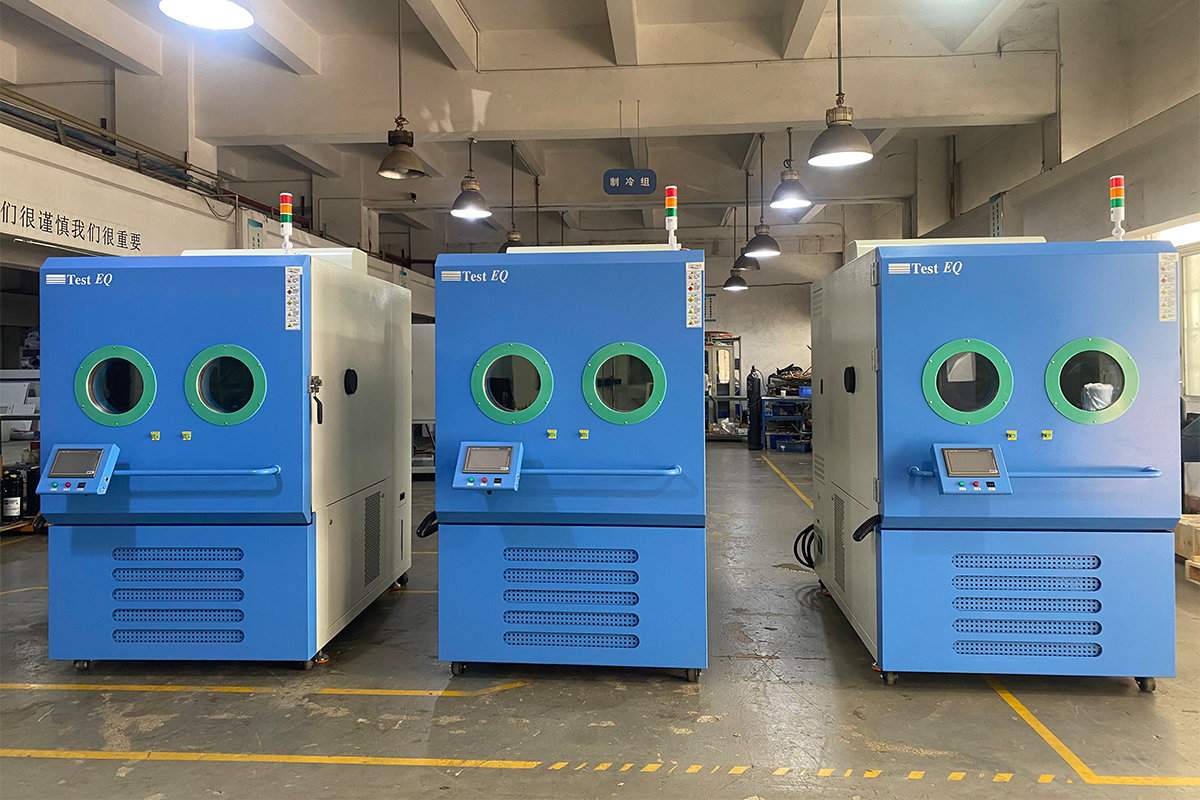
MIL-STD-810 Altitude Test — Why It’s Critical for Product Qualification
MIL-STD-810 altitude testing evaluates how products behave under low-pressure environments equivalent to high altitudes. It is no longer limited to military applications—today, it is a mandatory reliability validation step for:
• Aerospace & avionics systems
• Automotive electronics (ADAS / ECU / sensors)
• Lithium batteries & energy storage
• Semiconductors and PCB assemblies
Without proper altitude testing, products may pass standard lab tests but fail in real-world deployment.
Failure Risks You Cannot Ignore
At high altitude, air pressure drops dramatically, creating hidden risks:
• Internal/external pressure imbalance → enclosure deformation
• Reduced air density → overheating & thermal drift
• Low pressure → electrical arcing / insulation breakdown
• Sealed systems → battery swelling or leakage
These are not theoretical risks — they are field failure root causes seen in aerospace and EV industries.
MIL-STD-810 Test Methods Covered
TestEQ chambers support full compliance with key procedures:
• Storage Altitude Test – Non-operational exposure
• Operational Altitude Test – Performance under load
• Rapid Decompression Test – Controlled pressure drop
• Explosive Decompression Test – Extreme failure simulation
Each requires precise pressure ramp control + system stability, which is where most low-cost chambers fail.
Why TestEQ (vs Traditional Brands)
When comparing with Weiss Technik or ESPEC, TestEQ focuses on performance-per-cost + engineering flexibility.
1. More Stable Low-Pressure Control
• Fine pressure resolution
• Smooth ramp without overshoot
• High repeatability for validation testing
2. Integrated Temperature + Altitude Testing
• -70°C to +180°C combined with altitude simulation
• Real-world environment replication
• Eliminates need for multiple systems
3. Faster Customization for Non-Standard Requirements
• Tailored chamber size / altitude range
• Custom pressure change rates
• Flexible control logic for complex test cycles
4. Lower Total Cost of Ownership (TCO)
• Self-developed control system
• Reduced maintenance complexity
• Faster service response
Technical Specifications (Typical Range)
| Parameter | Specification |
|---|---|
| Altitude Range | Up to 100,000 ft (≈1 kPa) |
| Temperature Range | -70°C to +180°C |
| Pressure Control | High-precision PID control |
| Cooling Rate | Customizable |
| Chamber Volume | Custom (bench-top to walk-in) |
| Control System | Programmable + data logging |
Designed for Engineers, Buyers, and Labs
For Engineers
• Accurate simulation of real altitude conditions
• Reliable data for failure analysis
• Support for complex multi-stage test profiles
For Procurement Teams
• Competitive pricing vs European brands
• Faster lead time
• Custom-built solutions instead of compromise
For Laboratories
• Stable long-term operation
• Compliance-ready for certification testing
• Reduced downtime
Typical Applications
• Aircraft components & avionics validation
• Semiconductor reliability testing
• Defense equipment qualification
• Research laboratories
How to Choose the Right Altitude Test Chamber
Before purchasing, evaluate:
• Required maximum altitude (e.g., 60k vs 100k ft)
• Need for temperature integration
• Pressure ramp speed requirements
• Sample size and chamber capacity
• Data accuracy and repeatability
Mistake to avoid: Choosing a vacuum chamber instead of a true altitude simulation system (they are not equivalent).
Internal Linking Module
Recommended Equipment
Simulate low-pressure and high-altitude environments up to 100,000 ft with optional temperature integration for aerospace, electronics, battery, and defense qualification testing.
Combined temperature and altitude simulation system supporting MIL-STD-810, IEC 60068, and aerospace reliability validation under extreme environmental conditions.
Related Standards
Overview of MIL-STD-810H environmental testing methods covering temperature, humidity, vibration, shock, and altitude simulation for military and industrial qualification programs.
Learn how MIL-STD-810 thermal shock testing evaluates product durability under rapid temperature transitions and harsh environmental conditions.
Technical Resources
Technical guide covering altitude simulation principles, pressure control technologies, application industries, and chamber selection criteria.
Engineering-focused white paper explaining altitude chamber selection, pressure control accuracy, decompression capability, and common purchasing mistakes.
FAQ
What altitude level is required for MIL-STD-810 testing?
Typically ranges from 15,000 ft to 100,000 ft depending on application.
What is the difference between rapid and explosive decompression?
Rapid decompression is controlled, while explosive decompression simulates near-instant pressure drop.
Can altitude and temperature be tested together?
Yes. Advanced systems like TestEQ integrate both for realistic simulation.
Is a vacuum chamber enough for altitude testing?
No. Standard vacuum chambers lack precise control and compliance with MIL-STD-810.
CTA
Need an Altitude Testing Solution?
Whether you are qualifying aerospace components, military equipment, batteries, or electronic products to MIL-STD-810 altitude requirements, TestEQ can provide customized altitude test chambers with optional temperature, humidity, and rapid decompression capabilities.
"Contact our engineering team today" to discuss your test requirements and receive a customized chamber recommendation.
Request a Quote
Talk to an Engineer
Get a Customized Test Solution