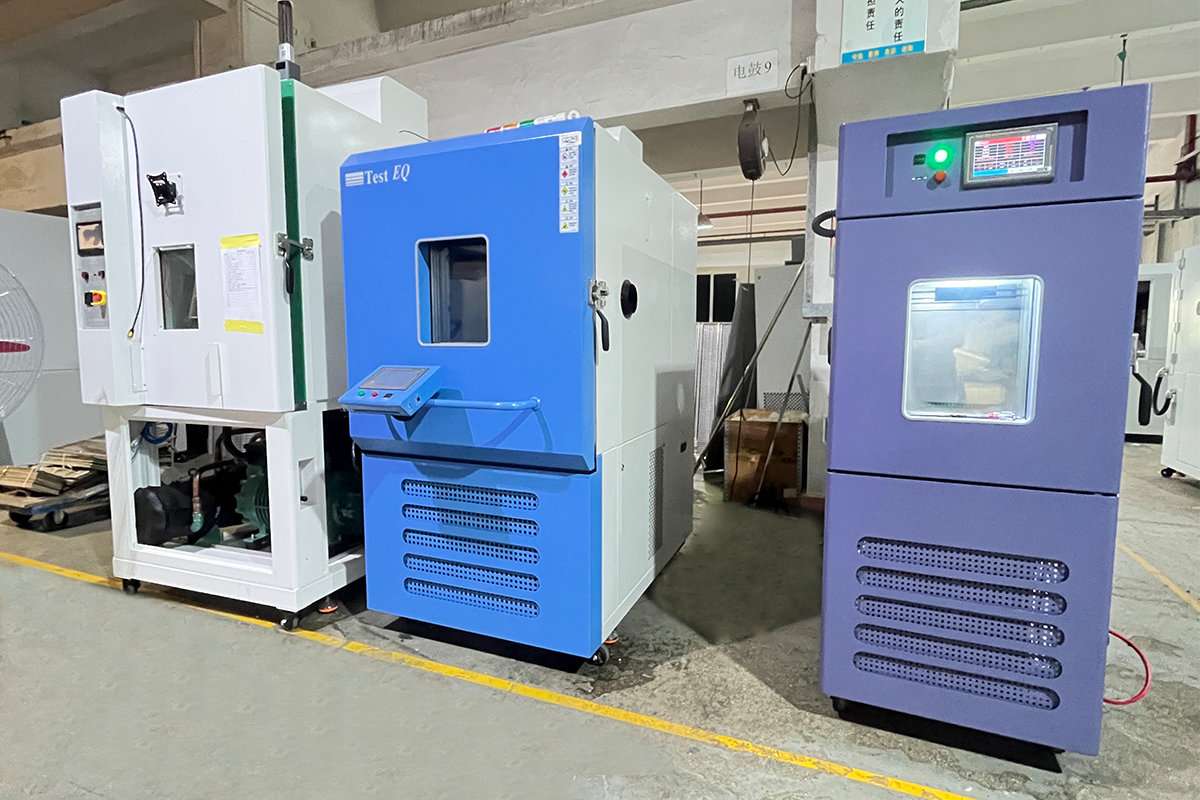
What Is Temperature Humidity Bias Test?
Temperature Humidity Bias Test (THB) is an accelerated environmental stress test that exposes samples to:
High temperature
High relative humidity
Electrical bias voltage
The combination of heat, moisture, and applied electrical stress accelerates corrosion and ionic contamination mechanisms that may occur during long-term field operation.
THB testing helps identify:
Moisture ingress failures
Corrosion of metallization
Leakage current increase
Dendritic growth
Package defects
Insulation degradation
Electrical performance drift
Because failures occur much faster than in normal operating environments, THB is widely used for product qualification and reliability verification.
Common THB Test Conditions
Typical THB test parameters include:
| Parameter | Typical Value |
|---|---|
| Temperature | 85°C |
| Relative Humidity | 85% RH |
| Bias Voltage | According to device specification |
| Test Duration | 500 h / 1000 h |
| Sample Quantity | Defined by qualification standard |
The most common condition is:
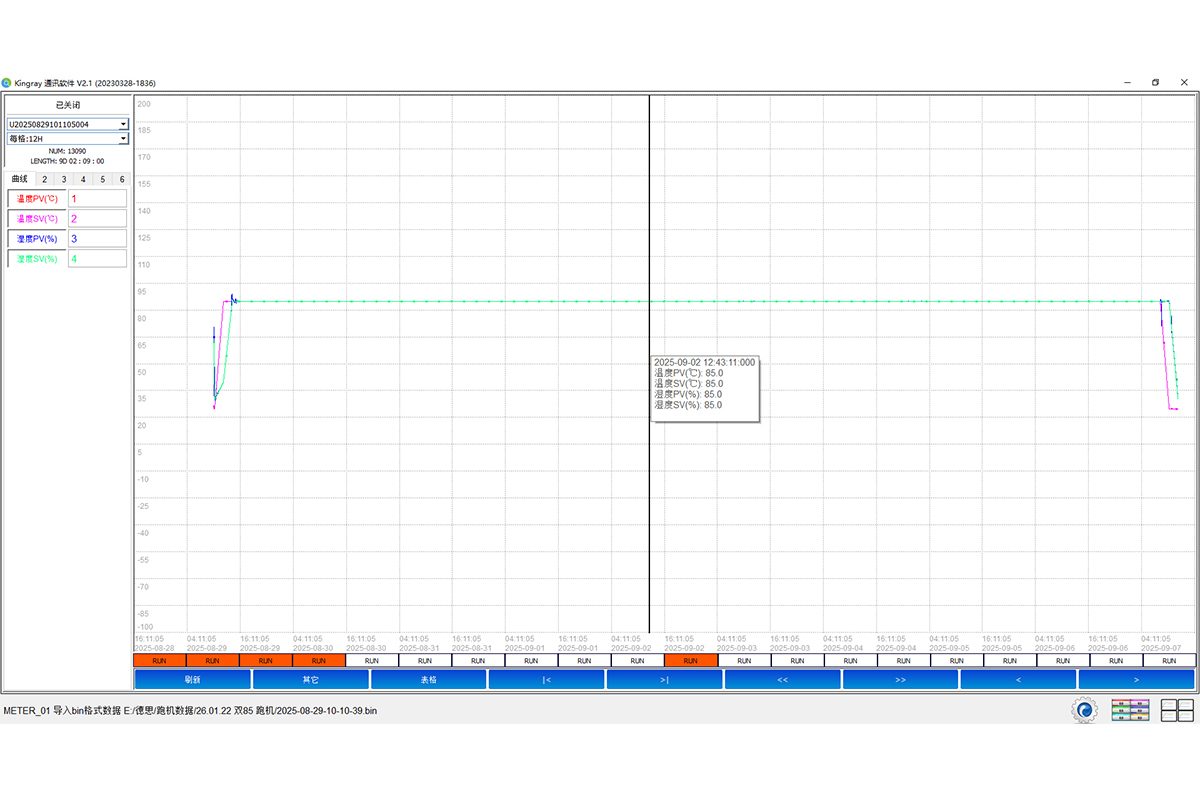
85°C / 85% RH with electrical bias for 1000 hours, often referred to as the "85/85 test".
Major Standards for Temperature Humidity Bias Testing
JESD22-A101
JESD22-A101 is the most widely used standard for steady-state temperature humidity bias life testing of semiconductor devices.
It specifies:
Environmental conditions
Sample requirements
Bias methods
Test duration
Failure criteria
AEC-Q100
Automotive IC manufacturers use AEC-Q100 qualification requirements, where THB testing is mandatory for many device grades.
IEC 60068 Series
IEC environmental testing standards are also widely adopted for reliability verification of electronic products and components.
Temperature Humidity Bias Test Procedure
1. Sample Preparation
Devices are electrically connected and mounted according to the test plan.
2. Apply Electrical Bias
Voltage or current stress is applied to simulate actual operating conditions.
3. Environmental Exposure
Samples are exposed to controlled conditions inside a THB chamber:
Temperature: 85°C
Humidity: 85% RH
Duration: 500–1000 hours
4. Electrical Monitoring
Key parameters are periodically measured:
Leakage current
Functional performance
Insulation resistance
Threshold voltage
5. Failure Analysis
After testing, failed devices are analyzed to identify moisture-induced degradation mechanisms.
THB vs HAST Testing
Although both tests evaluate moisture resistance, they differ significantly.
| Item | THB Test | HAST Test |
|---|---|---|
| Pressure | Atmospheric | Elevated pressure |
| Temperature | 85°C | 110–130°C |
| Humidity | 85% RH | 85–95% RH |
| Test Duration | 500–1000 h | 96–264 h |
| Stress Severity | Moderate | High |
| Application | Qualification | Accelerated screening |
THB provides realistic long-term aging conditions, while HAST offers faster acceleration and shorter test cycles.
Applications of Temperature Humidity Bias Testing
THB testing is widely used in:
Semiconductor Devices
IC packages
Microprocessors
Power devices
Memory chips
Automotive Electronics
ECUs
Sensors
Battery management systems
ADAS modules
Consumer Electronics
Smartphones
Tablets
Wearable devices
Aerospace and Defense Electronics
Critical components must demonstrate resistance to moisture-induced failures over extended operating periods.
THB Chamber Requirements
A high-performance Temperature Humidity Bias chamber should provide:
Stable 85°C/85% RH conditions
Uniform temperature distribution
Accurate humidity control
Multi-channel electrical feedthroughs
Long-duration operation capability
Reliable safety protection systems
For semiconductor and automotive qualification laboratories, chamber stability and repeatability are essential for obtaining valid test data.
 TestEQ Temperature Humidity Bias Chambers
TestEQ specializes in advanced environmental simulation equipment for semiconductor, automotive, aerospace, and electronics industries.
Our Temperature Humidity Bias chambers feature:
Temperature range from -70°C to +180°C
Humidity range from 20–98% RH
High-precision PID control
Multi-port electrical feedthrough design
Long-term continuous operation
Customized chamber sizes and fixture solutions
Compliance with JEDEC and IEC reliability standards
With extensive experience in reliability testing systems, TestEQ provides customized solutions for laboratories, OEM manufacturers, and research institutions worldwide.
Why Choose TestEQ?
High stability and repeatability
Customized bias feedthrough configurations
Support for JEDEC and automotive qualification testing
Global technical support
Suitable for semiconductor and electronics reliability laboratories
Internal Linking Module
Recommended Equipment
Designed for long-term humidity and reliability testing, suitable for semiconductor, electronics, automotive, and component qualification applications.
Provides highly accelerated temperature and humidity stress conditions for faster moisture resistance evaluation and failure analysis.
Related Standards
Explore the HAST standard used for accelerated moisture reliability qualification of semiconductor devices.
Explore major JEDEC reliability testing standards, including THB, HAST, HTOL, Temperature Cycling, and Thermal Shock tests. This guide helps engineers and laboratories understand qualification requirements and select the appropriate environmental test methods for semiconductor and electronic devices.
Related Resources
Compare Temperature Humidity Bias and HAST testing methods, acceleration factors, and industry applications.
Understand the major reliability testing methods used for semiconductor and electronic product qualification. Compare THB, HAST, Temperature Cycling, Thermal Shock, and HTOL tests to select the most suitable method for your application.
Frequently Asked Questions
1.What does THB stand for?
THB stands for Temperature Humidity Bias, an accelerated reliability test combining temperature, humidity, and electrical bias.
2.What is the standard condition for THB testing?
The most common condition is:
85°C
85% RH
1000 hours
commonly known as the 85/85 test.
3.Which standard defines THB testing?
JEDEC JESD22-A101 is the most commonly used standard for Temperature Humidity Bias testing.
4.What is the difference between THB and HAST?
THB operates under atmospheric pressure and longer durations, while HAST uses elevated temperature and pressure to accelerate moisture-related failures.
CTA
Request a Customized THB Chamber Solution:
Looking for a reliable Temperature Humidity Bias Test chamber manufacturer?
TestEQ provides customized THB environmental chambers for semiconductor, automotive, aerospace, and electronics applications. Contact our engineering team today to discuss your testing requirements and
"receive a tailored solution."