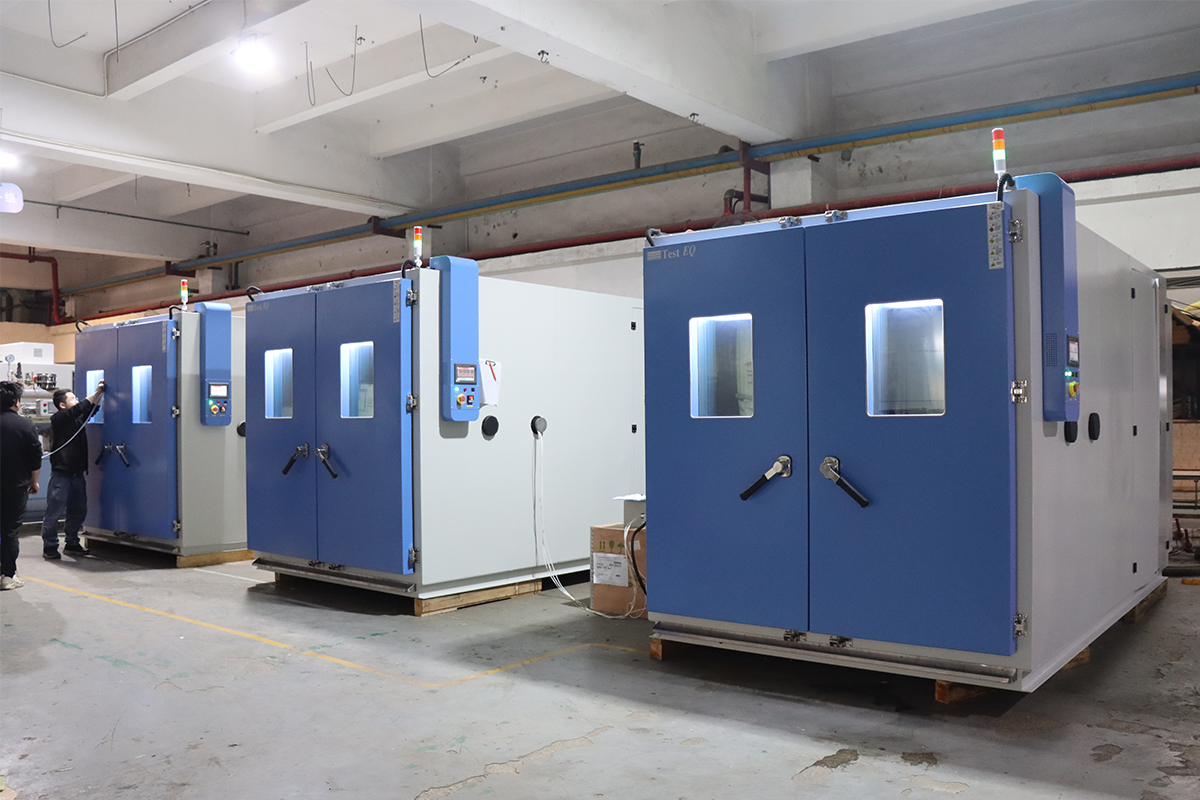
How Fast Temperature Change Improves Product Reliability Screening
As product reliability requirements continue to increase across electronics, automotive, aerospace, semiconductor, and EV industries, manufacturers are under pressure to detect latent defects before products reach the market. Traditional temperature cycling methods often fail to expose early-life weaknesses quickly enough, especially for high-density electronic assemblies and mission-critical components.
Fast temperature change testing has become one of the most effective accelerated reliability screening methods for identifying hidden manufacturing defects, material weaknesses, solder joint fatigue, connector instability, and thermal mismatch failures.
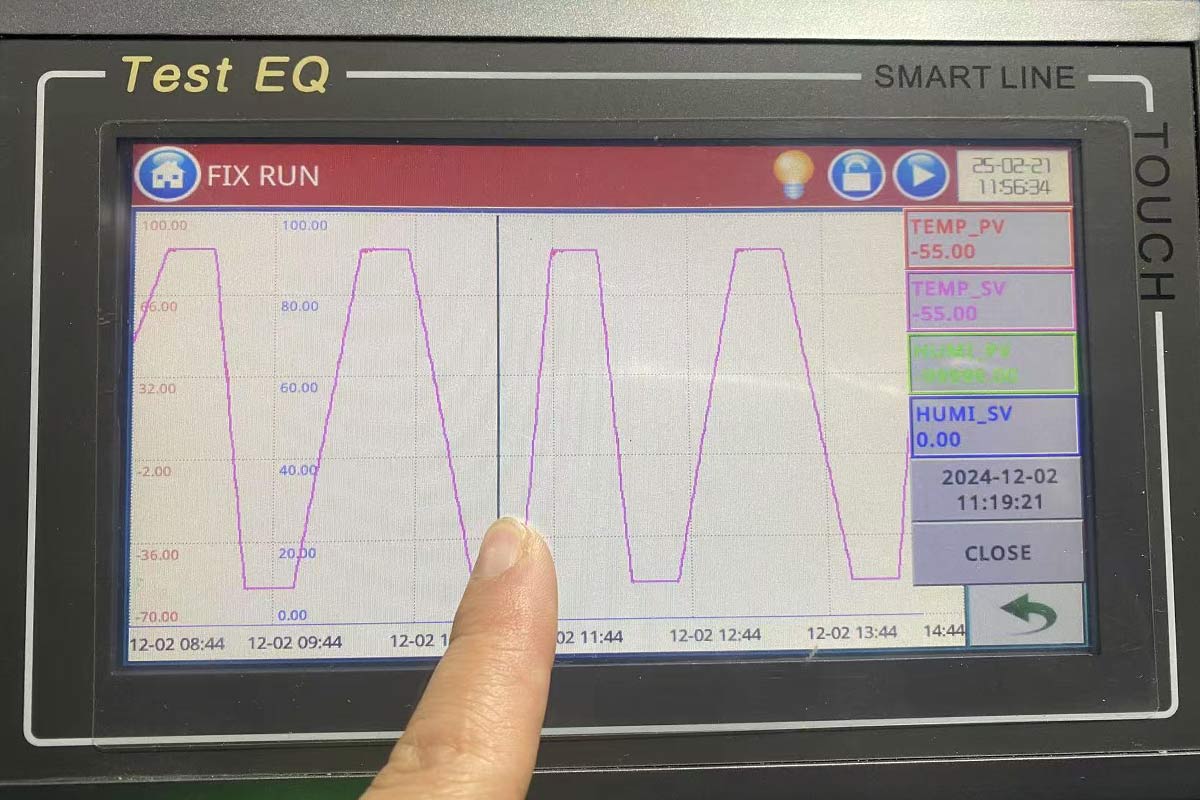
Unlike conventional environmental chambers, rapid temperature change chambers can achieve controlled ramp rates from 5°C/min to 25°C/min or higher, significantly accelerating thermal stress on products while maintaining temperature uniformity and repeatability.
Why Fast Temperature Change Matters in Reliability Screening
Rapid temperature transitions create stronger thermal expansion and contraction forces inside components and assemblies. These stresses help expose:
Weak solder joints
PCB micro-cracks
Bonding failures
Connector intermittence
Material delamination
Semiconductor packaging defects
Thermal fatigue issues
For engineers and laboratory teams, this means earlier defect discovery and shorter validation cycles. For procurement and manufacturing teams, it reduces warranty risks, field failures, and long-term quality costs.
Fast temperature change testing is widely used in:
Environmental Stress Screening (ESS)
HALT & HASS programs
Automotive electronics validation
Aerospace component qualification
Semiconductor package verification
Military and industrial electronics screening
Key Benefits of Rapid Temperature Change Chambers
Faster Defect Detection
High ramp rates accelerate thermal stress exposure, allowing failures to appear in shorter test durations compared with traditional thermal cycling methods.
Improved Product Reliability
By eliminating weak products during validation and production screening, manufacturers can improve overall field reliability and customer confidence.
Reduced Time-to-Market
Rapid screening shortens reliability qualification timelines, helping manufacturers launch products faster without compromising quality.
Better Screening Efficiency
Advanced airflow and refrigeration system design ensure stable transitions and repeatable test conditions for consistent screening results.
Why Manufacturers Choose TestEQ
TestEQ designs engineered rapid temperature change chambers for high-reliability industries requiring precise and repeatable thermal stress testing.
Key advantages include:
Linear ramp rates from 5°C/min to 25°C/min
Custom chamber sizes and non-standard configurations
Stable temperature uniformity during rapid transitions
Energy-efficient refrigeration architecture
Long-cycle durability for continuous ESS operation
Integrated remote monitoring and data logging
Support for automotive, aerospace, semiconductor and EV applications
TestEQ systems are designed to meet demanding international reliability testing requirements while supporting both R&D laboratories and high-volume manufacturing environments.
Typical Applications
Semiconductor & Electronics
Screening PCB assemblies, IC packages, power modules, sensors, and communication devices for latent thermal defects.
Automotive & EV
Validating ECU modules, battery systems, automotive electronics, and charging components under aggressive thermal cycling conditions.
Aerospace & Defense
Testing mission-critical assemblies exposed to extreme environmental changes and long operational lifecycles.
Industrial Manufacturing
Improving product consistency and reducing early-life failure rates in industrial control systems and automation devices.
Internal Linking Module
Recommended Products
Related Standards
Related Resources
FAQ
What is fast temperature change testing?
Fast temperature change testing is an accelerated environmental reliability test that rapidly changes temperature conditions to expose latent product defects and material weaknesses.
What ramp rates are commonly used?
Most reliability screening applications use linear ramp rates between 5°C/min and 25°C/min depending on product size and industry standards.
Which industries use rapid temperature change chambers?
Electronics, automotive, aerospace, semiconductor, EV battery, military, and industrial manufacturing industries widely use rapid temperature change testing.
What is the difference between thermal cycling and thermal shock?
Thermal cycling uses controlled temperature ramps, while thermal shock exposes products to near-instant temperature transitions between hot and cold zones.
CTA
Improve Reliability Screening with TestEQ
Looking for a high-performance rapid temperature change chamber for ESS, HALT, automotive electronics, or semiconductor reliability testing?
TestEQ provides engineered environmental testing systems with customizable ramp rates, stable performance, and long-term operational reliability for global manufacturers and laboratories.
"Contact TestEQ today for technical consultation and chamber configuration support."