
Test EQ

Standard
  • What Causes Temperature Ramp Instability in Environmental Chambers?
    What Causes Temperature Ramp Instability in Environmental Chambers?
    Temperature ramp performance is one of the most critical indicators of an environmental chamber. For aerospace, semiconductor, EV battery and automotive applications, unstable temperature ramps can lead to inaccurate test results, prolonged testing cycles, and even product reliability failures.Although many chambers claim high ramp rates, maintaining a stable and linear temperature transition is often far more challenging than simply reaching the target temperature.Understanding the root causes of temperature ramp instability helps engineers and laboratory managers select the right equipment and improve test consistency.
    12

    2026-06

  • What Is Thermal Cycling Test? Complete Guide to Reliability Testing
    What Is Thermal Cycling Test? Complete Guide to Reliability Testing
    Manufacturers today face increasing demands for product reliability, especially in automotive, battery, semiconductor, and electronics industries. Even minor failures caused by temperature fluctuations can result in costly recalls, warranty claims, and downtime.A Thermal Cycling Test helps engineers evaluate how products withstand repeated transitions between extreme hot and cold temperatures, revealing hidden weaknesses that may not appear during normal inspection. As a critical part of environmental testing and reliability qualification, thermal cycling testing supports product validation, design improvement, and compliance with global industry standards.This article explains the fundamentals of thermal cycling testing, including test principles, international standards, applications, common failure modes, and key considerations when selecting a thermal cycling chamber.
    08

    2026-06

  • TVAC and Thermal Vacuum Chamber: Principles, Applications and Selection Guide
    TVAC and Thermal Vacuum Chamber: Principles, Applications and Selection Guide
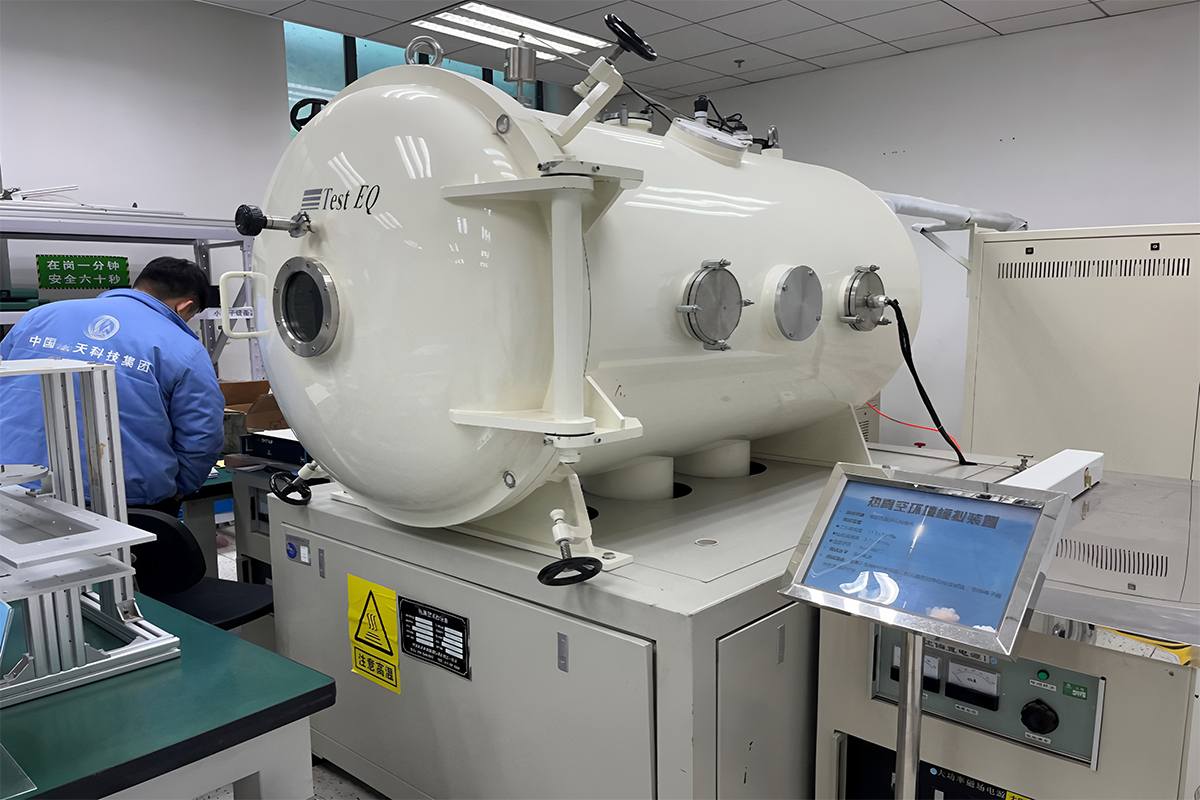
    As satellites, aerospace electronics, space payloads, sensors, and advanced semiconductor devices become increasingly sophisticated, reliability testing under extreme environmental conditions has become a critical requirement.A TVAC (Thermal Vacuum) Chamber is designed to reproduce the harsh conditions encountered in space, combining high vacuum levels with extreme temperature cycling. These systems allow engineers to evaluate product performance, material stability, thermal behavior, and mission reliability before deployment.For aerospace manufacturers, research laboratories, government agencies, and high-reliability electronics suppliers, thermal vacuum testing has become an essential qualification step for mission-critical products.
    05

    2026-06

  • HALT vs Thermal Cycling Testing: Which Reliability Method Should You Choose?
    HALT vs Thermal Cycling Testing: Which Reliability Method Should You Choose?
    For electronics, automotive components, aerospace systems, and industrial products, reliability failures can result in costly recalls, warranty claims, and reputation damage. Two commonly used accelerated reliability methods are HALT (Highly Accelerated Life Testing) and Thermal Cycling Testing.Although both tests expose products to temperature-related stress, they serve very different engineering objectives. Understanding these differences helps engineers, laboratories, and procurement teams select the most effective validation strategy.
    03

    2026-06

  • HAST vs THB Testing: Key Differences, Standards and Applications for Semiconductor Reliability Validation
    HAST vs THB Testing: Key Differences, Standards and Applications for Semiconductor Reliability Validation
    In semiconductor, IC packaging, automotive electronics, and advanced materials industries, moisture-related failure mechanisms remain one of the most critical reliability risks. Two widely used accelerated stress methods—HAST (Highly Accelerated Stress Test) and THB (Temperature Humidity Bias)—are often compared when defining qualification strategies.Although both are humidity-based reliability tests, they differ significantly in stress mechanism, testing conditions, and application focus. Selecting the correct method directly impacts failure detection efficiency, product qualification accuracy, and time-to-market.TestEQ provides advanced environmental simulation systems designed for JEDEC-compliant reliability validation, supporting both HAST and THB testing environments.
    01

    2026-06

  • How Fast Temperature Change Testing Improves Product Reliability Screening
    How Fast Temperature Change Testing Improves Product Reliability Screening
    Fast temperature change testing is a critical reliability screening method used to identify latent defects in electronics, automotive components, semiconductors, EV batteries, and industrial products. By applying rapid thermal transitions, manufacturers can accelerate thermal stress exposure, detect weak points earlier, and improve long-term product reliability. TestEQ rapid temperature change chambers support precise ramp rates from 5°C/min to 25°C/min for ESS, HALT, thermal cycling, and accelerated reliability validation applications.
    29

    2026-05

  • How to Choose the Right ESS Chamber for Semiconductor Testing
    How to Choose the Right ESS Chamber for Semiconductor Testing
    As semiconductor devices become smaller, faster, and more integrated, reliability testing has become a critical part of product qualification and mass production. From automotive ECUs and power modules to AI chips and industrial control ICs, manufacturers increasingly rely on Environmental Stress Screening (ESS) chambers to identify latent defects before products reach the market.However, selecting the right ESS chamber is not simply about choosing a temperature range. Engineers, laboratory managers, and procurement teams must evaluate thermal performance, temperature uniformity, ramp rate stability, automation capability, and long-term operating reliability.This guide explains the key factors semiconductor manufacturers should consider when choosing an ESS chamber for high-reliability testing applications.
    25

    2026-05

  • Thermal Cycling Test Repeatability: Why Results Become Inconsistent
    Thermal Cycling Test Repeatability: Why Results Become Inconsistent
    Thermal cycling test repeatability has become a critical issue in automotive, semiconductor, aerospace, and electronics reliability validation. This article explores why thermal cycling test results become inconsistent across different environmental chambers, including airflow uniformity, ramp-rate instability, sensor calibration, and chamber engineering design. Learn how advanced thermal cycling chamber technology improves repeatability, testing accuracy, and long-term reliability validation for high-performance applications.
    22

    2026-05

  • How to Reduce Semiconductor Failure Rate with Advanced Environmental Testing Solutions
    How to Reduce Semiconductor Failure Rate with Advanced Environmental Testing Solutions
    Semiconductor reliability failures can lead to costly recalls, unstable system performance, and reduced product lifespan. This article explores how environmental reliability testing — including thermal cycling, rapid temperature change, temperature humidity testing, and ESS screening — helps semiconductor manufacturers reduce product failure rates and improve long-term reliability. Learn how advanced environmental test chambers support more accurate validation, faster defect detection, and higher product quality for automotive electronics, AI servers, telecom systems, and semiconductor applications.
    18

    2026-05

  • Common Failure Causes in Automotive Thermal Cycling Testing
    Common Failure Causes in Automotive Thermal Cycling Testing
    Automotive electronics are exposed to some of the harshest environmental conditions in modern engineering. From EV battery systems and ECUs to ADAS modules and automotive sensors, components must survive continuous temperature fluctuations over long service lifecycles.However, many automotive products still fail during thermal cycling testing — even after passing initial validation.Understanding why thermal cycling tests fail is critical for engineers, quality teams, and laboratory managers seeking more reliable automotive validation results.
    15

    2026-05

  • EV Battery Environmental Testing Standards Explained
    EV Battery Environmental Testing Standards Explained
    As global EV battery safety requirements continue to evolve, manufacturers and testing laboratories face increasing pressure to comply with international environmental testing standards. This article explains the most important EV battery testing standards, including UN 38.3, IEC 62660, SAE J2464, and ISO 16750, while exploring how advanced environmental test chambers help engineers validate battery safety, thermal reliability, and long-term durability under extreme conditions.
    11

    2026-05

  • How to Select Temperature Change Rate (5°C/min to 25°C/min) for Environmental Test Chambers
    How to Select Temperature Change Rate (5°C/min to 25°C/min) for Environmental Test Chambers
    Selecting the correct temperature change rate is a critical decision in environmental reliability testing, directly affecting test accuracy, failure detection efficiency, and overall equipment investment. This guide explains how to choose between 5°C/min to 25°C/min based on industry standards, product characteristics, and real test conditions. It is designed for engineers, procurement teams, and laboratory managers who need to balance compliance requirements, testing efficiency, and total cost of ownership when specifying thermal cycling or rapid temperature change chambers.
    04

    2026-05

Ask For A Quick Quote

We will contact you within 1 working day, please pay attention to the email with
the suffix "@test-eq.com".

We will contact you within 1 working day, please pay attention to the email with the suffix "@test-eq.com".

Company
Name*
Phone
E-Mail*
Nation
Message
By selecting the ‘I agree’ button, you consent to the processing of your personal data for marketing purposes and for the sending of commercial information by TESTEQ Company through telephone, e-mail, newsletters, text messages such as sms, chat and social networks.
I AGREE
By submitting your personal data, you declare that you have read the Privacy Policy of the website.

P.IVA: 91441900MAECQJHY37 Guangdong Test EQ Equipment Co., Ltd. | All Rights Reserved