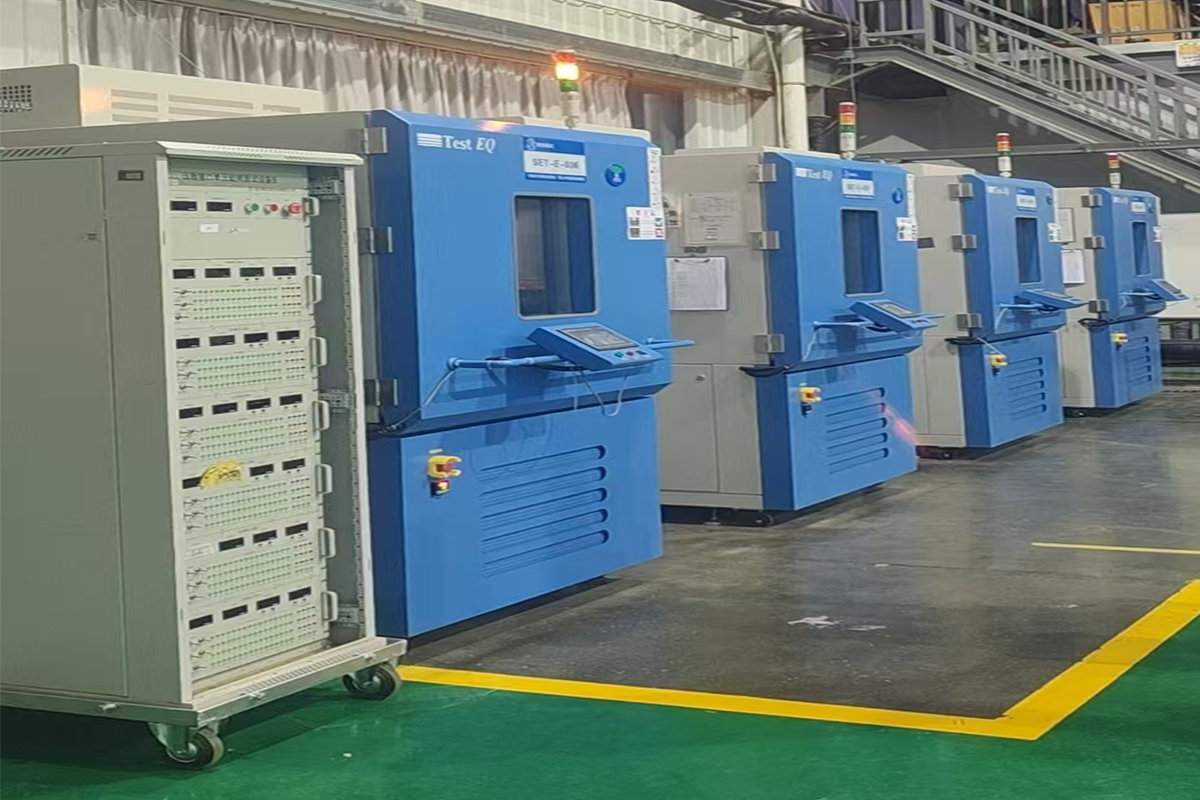
What Is a Thermal Cycling Test?
Thermal cycling testing repeatedly exposes a product to alternating high and low temperatures under controlled conditions. Unlike thermal shock testing, which transfers specimens rapidly between separate hot and cold zones, thermal cycling changes temperature gradually according to a programmed ramp rate.
The objective is to reproduce long-term thermal stress within a shorter qualification period while monitoring structural integrity and functional performance.
Typical applications include:
Semiconductor reliability qualification
PCB and solder joint verification
Automotive electronic modules
Aerospace avionics
EV battery systems
Medical devices
Industrial control equipment
Standard Thermal Cycling Test Procedure
Although exact procedures vary by industry standard, a typical workflow includes the following steps.
1. Define Test Requirements
Before testing, determine:
Applicable test standard
Temperature range
Ramp rate
Dwell time
Number of cycles
Acceptance criteria
Common standards include IEC 60068, JEDEC JESD22, MIL-STD-810, ISO 16750, and AEC-Q100.
2. Prepare Test Samples
Inspect each specimen before testing and record:
Initial dimensions
Electrical performance
Functional status
Appearance
Photographic documentation
Proper fixturing should avoid restricting thermal expansion.
3. Program the Temperature Profile
Typical parameters include:
| Parameter | Typical Value |
|---|---|
| Low Temperature | -40°C to -70°C |
| High Temperature | +85°C to +180°C |
| Ramp Rate | 2–15°C/min |
| Dwell Time | 15–60 minutes |
| Test Cycles | 100–2000 cycles |
Actual conditions should follow the selected qualification standard.
4. Monitor During Testing
During operation, engineers should continuously monitor:
Chamber temperature uniformity
Controller stability
Sample functionality
Sensor readings
Alarm history
Data logging
Consistent environmental control is essential for repeatable results.
5. Inspect After Completion
After the specified number of cycles:
Perform electrical testing
Conduct visual inspection
Check solder joints
Examine sealing materials
Inspect mechanical structures
Compare results with initial measurements
Any degradation should be documented for reliability analysis.
Common Failure Modes
Thermal cycling commonly reveals:
Solder joint fatigue
PCB cracking
Wire bond failure
Connector loosening
Seal leakage
Plastic deformation
Material delamination
Electronic parameter drift
Identifying these failure mechanisms early helps improve product design before production.
Choosing the Right Thermal Cycling Chamber
Reliable testing depends not only on the procedure but also on chamber performance.
When selecting equipment, consider:
Temperature accuracy
Temperature uniformity
Linear ramp capability
Recovery time
Airflow design
Controller precision
Data recording
Safety protection
Long-term operational stability
TestEQ Thermal Cycling Chambers feature high-precision PID control, optimized airflow, programmable multi-segment profiles, and stable temperature uniformity, making them suitable for semiconductor, automotive, aerospace, and electronics qualification laboratories.
Why Engineers Choose TestEQ
TestEQ environmental chambers are designed for demanding reliability testing applications by providing:
Wide temperature range down to -70°C
High-temperature capability up to +180°C
Stable programmable ramp rates
Excellent chamber temperature uniformity
Long-term continuous operation
PLC/HMI intelligent control
Remote monitoring and data recording
Custom chamber sizes for laboratory and production testing
Whether validating new product designs or performing qualification testing, TestEQ provides dependable environmental simulation solutions for global manufacturers.
Frequently Asked Questions
1.How many cycles are required for thermal cycling testing?
The required number depends on the applicable standard and product requirements. Qualification testing may require anywhere from 100 to over 2,000 cycles.
2.What is the difference between thermal cycling and thermal shock?
Thermal cycling changes temperature gradually using controlled ramp rates, while thermal shock rapidly transfers specimens between extreme hot and cold environments.
3.Which industries use thermal cycling testing?
Automotive, aerospace, semiconductor, electronics, batteries, telecommunications, medical devices, and industrial manufacturing all rely on thermal cycling for reliability verification.
4.Which standards define thermal cycling procedures?
Common standards include IEC 60068, JEDEC JESD22, MIL-STD-810, ISO 16750, AEC-Q100, and customer-specific qualification specifications.
5.How do I choose a thermal cycling chamber?
Selection should consider temperature range, ramp rate, chamber size, control accuracy, airflow uniformity, data acquisition, and compliance with relevant testing standards.
Internal Linking Module
Recommended Products
Designed for long-term reliability testing with precise temperature control and programmable cycling profiles for electronics, automotive, aerospace, and industrial applications.
Explore TestEQ's environmental test chambers for temperature, humidity, thermal cycling, reliability qualification, and accelerated life testing. Available in standard and custom configurations for laboratories, manufacturers, and research institutions.
Recommended Standards
Understand the IEC 60068 series covering temperature, humidity, vibration, thermal cycling, and environmental reliability testing requirements.
Learn JEDEC thermal cycling requirements for semiconductor device qualification, including temperature profiles, cycle counts, and acceptance criteria.
Recommended Resources
Thermal Cycling vs Temperature Cycling
Compare thermal cycling and temperature cycling, understand their differences, applications, and how to select the appropriate test method.
Explore environmental testing methods, international standards, chamber selection, and best practices for product reliability verification.
Request a Thermal Cycling Testing Solution
Selecting the correct thermal cycling procedure is only part of achieving reliable qualification results. Chamber performance, temperature stability, airflow uniformity, and control accuracy are equally important.
TestEQ designs and manufactures advanced environmental test chambers for aerospace, automotive, semiconductor, electronics, battery, and research laboratories worldwide.
"Contact TestEQ today" to discuss your testing requirements, request technical recommendations, or receive a customized thermal cycling chamber solution tailored to your application.