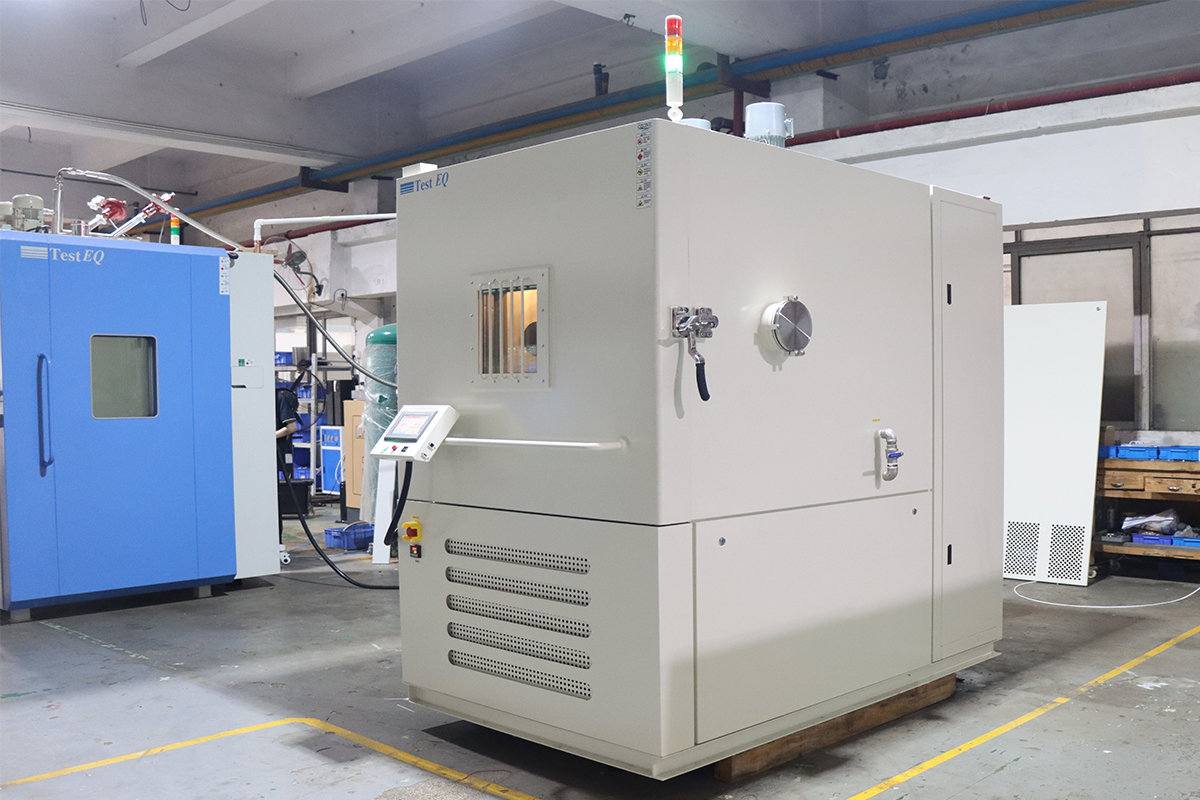
What Is a Temperature Altitude Test Chamber?
A Temperature Altitude Test Chamber combines:
Precise temperature control
Vacuum/low-pressure simulation
Programmable environmental cycling
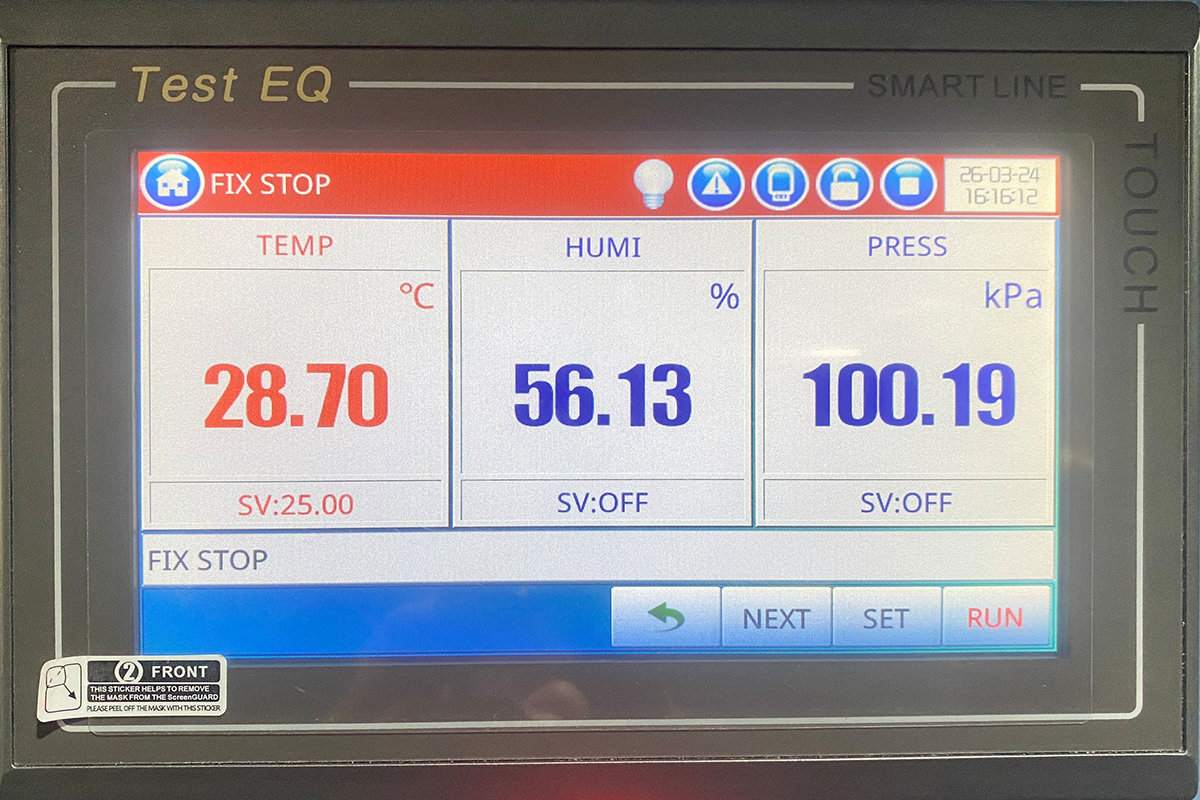
Automated test monitoring and data logging
The chamber can simultaneously create conditions such as:
| Test Parameter | Typical Range |
|---|---|
| Temperature | -70°C to +180°C |
| Altitude Simulation | Sea Level to 100,000 ft (30,000 m) |
| Pressure Range | 101 kPa to 0.5 kPa |
| Humidity (Optional) | 20%–98% RH |
This allows engineers to evaluate how products behave when exposed to conditions encountered during air transportation, mountain deployment, aerospace missions, or military operations.
Why Is Temperature Altitude Testing Important?
1. Identify Hidden Reliability Risks
Reduced air pressure affects:
Heat dissipation efficiency
Material expansion and contraction
Electronic component performance
Battery behavior
Seal integrity
Products that perform normally at sea level may fail unexpectedly at high altitudes.
Altitude testing helps uncover:
Component overheating
Electrical arcing
Structural deformation
Leakage failures
Sensor inaccuracies
before deployment.
2. Verify Compliance with International Standards
Many industries require altitude testing to meet regulatory requirements.
Common standards include:
IEC 60068 Environmental Testing
MIL-STD-810H
RTCA DO-160
ISO 16750
JEDEC Reliability Standards
Aerospace Qualification Specifications
Using a qualified Temperature Altitude Test Chamber ensures test results are traceable, repeatable, and accepted by customers and certification bodies.
3. Reduce Warranty and Field Failure Costs
Field failures are significantly more expensive than laboratory testing.
By performing accelerated environmental simulation during product development, manufacturers can:
Improve product robustness
Shorten design iterations
Reduce warranty claims
Increase customer confidence
Accelerate market approval
For aerospace, automotive, and semiconductor manufacturers, early failure detection can save millions of dollars in lifecycle costs.
Key Applications of Temperature Altitude Chambers
Aerospace & Aviation
Aircraft electronics and avionics systems must function reliably under extreme altitude and temperature fluctuations.
Typical test items include:
Flight control systems
Navigation equipment
Sensors
Aerospace connectors
Communication modules
Automotive & New Energy Vehicles
Modern vehicles contain sensitive electronic systems that may experience low-pressure environments during transportation or operation in mountainous regions.
Common applications:
Battery packs
BMS controllers
ECUs
Automotive sensors
Power electronics
Semiconductor & Electronics
Electronic devices are increasingly required to operate in harsh environments.
Temperature altitude testing helps evaluate:
PCB reliability
Semiconductor packaging
Electronic assemblies
Telecom equipment
Industrial controllers
Defense & Military Equipment
Military products often operate in diverse environmental conditions.
Testing validates:
Mission readiness
Environmental durability
Equipment survivability
Long-term reliability
under extreme conditions.
Critical Features to Consider When Selecting a Temperature Altitude Test Chamber
When purchasing a chamber, engineers and laboratory managers should evaluate:
Temperature Performance
Look for:
Wide temperature range
Fast ramp rates
Excellent temperature uniformity
Stable control accuracy
Vacuum System Capability
A high-performance vacuum system should provide:
Rapid pressure reduction
Stable altitude simulation
Accurate pressure control
Chamber Construction
Important factors include:
Stainless steel interior
Vacuum-resistant structure
Long service life
Easy maintenance
Control & Data Management
Modern laboratories require:
Remote monitoring
Automated testing programs
Data export functions
Compliance reporting
Why Choose TestEQ Temperature Altitude Test Chambers?
TestEQ specializes in advanced environmental simulation solutions for aerospace, automotive, electronics, defense, and research laboratories worldwide.
Key advantages include:
Temperature range up to -70°C to +180°C
Altitude simulation up to 100,000 ft
Custom chamber sizes available
Advanced programmable controller
High-precision temperature and pressure control
Compliance with IEC, MIL-STD, RTCA, ISO, and JEDEC testing requirements
OEM and fully customized environmental testing solutions
Whether for product qualification, reliability validation, or laboratory accreditation projects, TestEQ provides comprehensive environmental simulation systems designed to meet demanding testing requirements.
Conclusion
A Temperature Altitude Test Chamber is far more than a laboratory testing device—it is a critical tool for ensuring product reliability, safety, and compliance in challenging real-world environments.
By accurately reproducing the combined effects of temperature extremes and low-pressure conditions, manufacturers can identify weaknesses early, reduce development risks, and improve product performance before market release.
As industries continue demanding higher reliability standards, investing in a high-quality Temperature Altitude Test Chamber is becoming essential for engineering teams, testing laboratories, and procurement professionals seeking long-term product success.
FAQ
1.What is the purpose of a Temperature Altitude Test Chamber?
A Temperature Altitude Test Chamber simulates high-altitude and extreme temperature conditions to evaluate product performance, reliability, and safety before deployment.
2.Which industries require altitude testing?
Aerospace, aviation, automotive, semiconductor, telecommunications, defense, and research laboratories commonly perform altitude testing.
3.What altitude can a Temperature Altitude Test Chamber simulate?
Most advanced systems can simulate conditions from sea level up to 100,000 feet (30,000 meters), depending on chamber specifications.
4.What standards require altitude testing?
Common standards include IEC 60068, MIL-STD-810H, RTCA DO-160, ISO 16750, and various aerospace and defense qualification requirements.
5.Can TestEQ provide customized Temperature Altitude Test Chambers?
Yes. TestEQ offers standard and fully customized temperature altitude chambers with different volumes, temperature ranges, vacuum levels, and automation features to meet specific testing requirements.
Internal Linking Module
Recommended Equipment
Simulate temperature and low-pressure environments for aerospace, automotive, electronics, and defense reliability testing.
Comprehensive environmental simulation systems for temperature, humidity, thermal cycling, and qualification testing.
Related Standards
Understand military environmental testing requirements and chamber selection recommendations.
Learn key environmental testing procedures for reliability verification and product qualification.
Related Resources
Compare two critical reliability testing methods and determine the best solution for your application.
A practical guide for engineers and procurement teams evaluating environmental testing equipment suppliers.
CTA:
Request a Temperature Altitude Chamber Solution from TestEQ:
Choosing the right Temperature Altitude Test Chamber is not only about specifications—it is about ensuring your products meet reliability, safety, and compliance requirements throughout their lifecycle.
At TestEQ, we work closely with aerospace manufacturers, automotive suppliers, semiconductor companies, research laboratories, and testing institutions to deliver customized environmental simulation systems tailored to real-world testing challenges.
Tell us your product size, testing standard, temperature range, and altitude requirements, and TestEQ will provide a tailored solution within 24 hours.
"Request a Free Quote Now | OEM & Custom Design Available Worldwide"