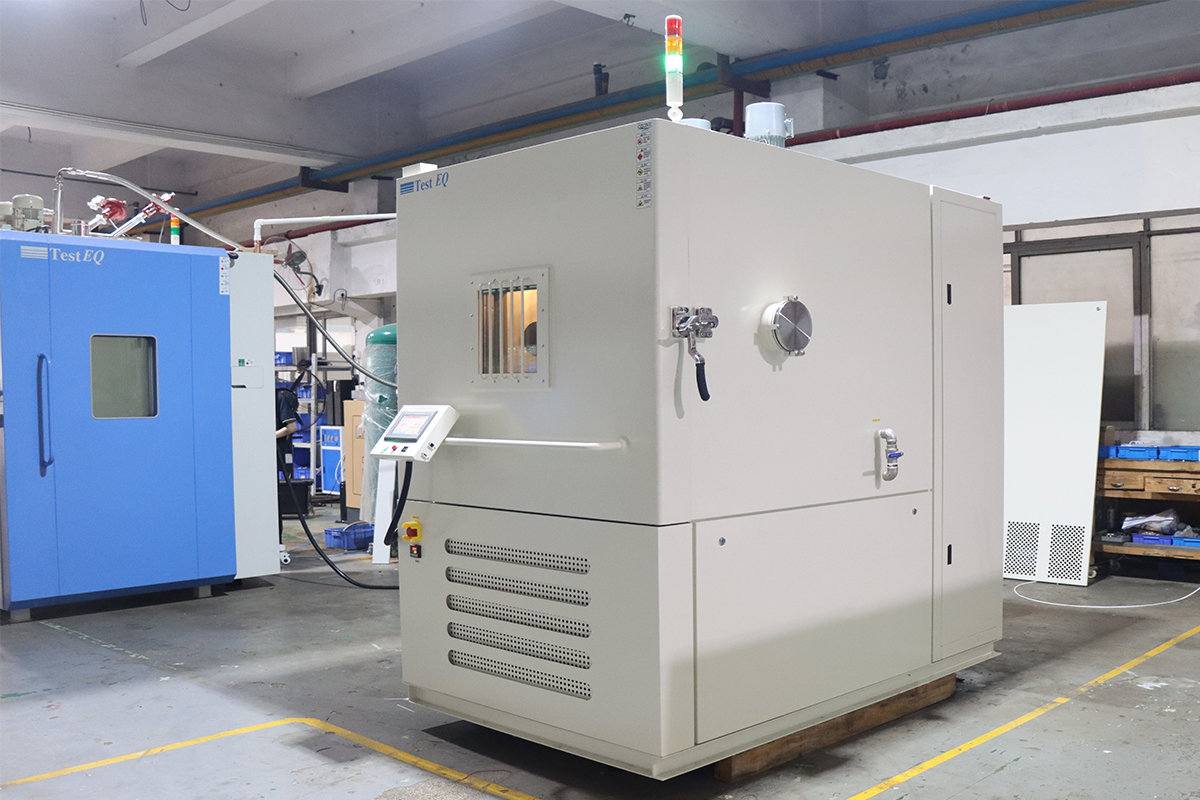
Why Selection Matters in 2026
Environmental test chambers are no longer just laboratory equipment—they are now critical reliability validation systems for automotive, semiconductor, aerospace, and energy storage industries.
In 2026, the global market is shifting from brand-driven selection to application-driven engineering decisions:
Faster product cycles (EV & semiconductors)
Higher reliability requirements (AEC-Q100, IEC 60068, JESD22)
Cost optimization pressure from global supply chains
Choosing the wrong chamber may lead to:
Invalid test data
Certification failure
Product recall risk
Higher lifecycle cost
What is an Environmental Test Chamber?
An environmental test chamber is a controlled system that simulates extreme conditions such as:
Temperature cycling (-70°C to +180°C)
Humidity stress (20%–98% RH)
Thermal shock
Rapid rate temperature change
ALT / HAST accelerated aging tests
These systems are widely used for:
Automotive electronics reliability validation
Semiconductor packaging testing
Key Selection Criteria for 2026 Buyers
1. Temperature & Humidity Performance
Temperature range: -70°C to +180°C (or higher)
Humidity range: 20%–98% RH
Stability: ±0.1°C to ±2°C depending on grade
2. Thermal Control Speed
Standard: 3°C/min – 10°C/min
High performance: 15°C/min – 25°C/min
3. Compliance Standards
IEC 60068 (Environmental testing baseline)
JESD22 (Semiconductor reliability)
ISO 16750 (Automotive electronics)
MIL-STD-810 (Defense/aerospace)
4. Energy Efficiency
Modern systems can reduce energy consumption by 30%–50% through:
Cold/heat balance technology
Smart refrigeration control
AI-based load optimization
5. Customization Capability
Critical for:
Battery large-scale testing
EV component testing
Non-standard chamber size or airflow design
Global Environmental Test Chamber Manufacturer Ranking 2026
Tier 1 – Premium Precision Manufacturers
ESPEC (Japan)
Weiss Technik (Germany)
Thermotron (USA)
Strengths:
Ultra-high precision control
Long-term stability
Strong R&D validation systems
Weakness:
High cost
Long delivery cycles (8–20 weeks)
Tier 2 – Industrial Balanced Manufacturers
CSZ (USA)
Binder (Germany)
Angelantoni (Italy)
Strengths:
Balanced performance
Standardized solutions
Reliable industrial usage
Weakness:
Limited customization
Moderate flexibility
Tier 3 – China Manufacturing Leaders
Chinese manufacturers are rapidly expanding in:
Rapid thermal cycling systems
ESS / HALT / HASS systems
Large-scale custom chambers
A key representative of engineering-driven manufacturers is TestEQ
Advantages of China manufacturers:
30%–60% cost advantage
Faster delivery (4–10 weeks)
Strong customization capability
Rapid engineering iteration
China vs Global Manufacturers Comparison
| Dimension | Global Brands | China Manufacturers |
|---|---|---|
| Precision | Highest | High (improving fast) |
| Cost | Very high | Medium–low |
| Delivery time | 8–20 weeks | 4–10 weeks |
| Customization | Limited | Strong |
| Service | Local strong | Fast response |
2026 Market Trends in Environmental Testing
1. Application-driven procurement
Engineers now prioritize:
Test compliance
Energy efficiency
Total lifecycle cost
2. EV + Semiconductor expansion
Battery thermal runaway testing
Chip packaging reliability testing
ESS system validation demand growth
3. Engineering competition shift
Chinese manufacturers are moving from:
“low cost advantage” → “engineering capability competition”
How to Choose the Right Supplier
If you are:
Semiconductor R&D lab --Choose Tier 1 global brands
Automotive electronics company--Hybrid evaluation
Mass production factory--China manufacturers preferred
Why TestEQ is Positioned in This Market
TestEQ focuses on engineering-oriented environmental simulation systems, including:
Rapid temperature cycling chambers (up to 25°C/min)
ESS reliability screening systems
Thermal shock systems
Large-scale walk-in environmental chambers
Core strengths:
Custom engineering design
Fast production cycles
Industrial reliability optimization
Conclusion
In 2026, environmental test chamber selection is no longer about brand alone.
The real decision formula is:
Performance × Cost × Delivery Capability
Global brands = maximum precision
China manufacturers = best cost-performance
Engineering suppliers = fastest customization
FAQ
Q1: What is the best environmental test chamber manufacturer in 2026?
There is no single best brand. ESPEC and Weiss Technik lead in precision, while Chinese manufacturers offer better cost-performance and customization flexibility.
Q2: What standards are used for environmental testing?
Common standards include IEC 60068, JESD22, ISO 16750, and MIL-STD-810 depending on industry requirements.
Q3: Why choose China environmental test chamber manufacturers?
China manufacturers provide faster delivery, lower cost, and strong customization capability, especially for EV and industrial applications.
Q4: What is the typical temperature range of a test chamber?
Most environmental chambers operate between -70°C to +180°C, depending on design and application.
Q5: Is rapid thermal cycling important?
Yes. It is critical for semiconductor and automotive reliability testing to simulate real-world thermal stress conditions.
Internal Linking Module
Recommended Equipment
1. Environmental Chamber Manufacturer for Reliable Temperature & Humidity Testing
Suitable for: Electronics, automotive, battery, aerospace, and laboratory environmental simulation testing.
2. Temperature Humidity Test Chamber for Standard & Walk-In Environmental Testing
Suitable for: Product reliability validation, temperature-humidity cycling, accelerated aging, and large-scale environmental testing.
Recommended Testing Standards
1. MIL-STD-810H Environmental Test Chamber for Advanced Military & Industrial Reliability Testing
Learn how MIL-STD-810H validates product performance under temperature, humidity, vibration, shock, and altitude conditions.
2. MIL-STD-810 Environmental Stress Screening (ESS) Guide
Understand Environmental Stress Screening (ESS) requirements and how to select compliant ESS chambers.
Recommended Resources
1. How to Choose the Right ESS Chamber for Semiconductor Testing
A practical guide for engineers and procurement teams selecting ESS chambers for semiconductor reliability testing.
2. How to Select Temperature Change Rate (5°C/min to 25°C/min) for Environmental Test Chambers
Learn how temperature ramp rates affect testing efficiency, reliability validation, and chamber selection.
CTA :
Need a Custom Environmental Test Chamber Solution?
Whether you need:
Rapid Thermal Cycling Chamber (up to 25°C/min)
ESS Reliability Screening System
Large-scale Walk-in Environmental Chamber
Or Fully Customized Environmental Simulation System
We can support full engineering design, manufacturing, and global delivery.
"Contact TestEQ Engineering Team"
TestEQ specializes in high-performance and customized environmental testing systems for global industrial applications.
Request Technical Proposal:
Temperature range requirement
Chamber size / volume
Industry application (EV / semiconductor / aerospace)
Required standards (IEC / JESD / ISO / MIL)
Our engineers will respond with a tailored solution + quotation comparison within 24–48 hours